

Losing a loved one can be very hard, testing your faith and sense of purpose. Finding comfort and support in your spiritual journey is key during this time.
You might find it hard to mix your faith with the pain of loss. This guide aims to help you, offering a caring and supportive hand through grief and healing.
Key Takeaways
- Understanding the complexities of faith during times of loss
- Finding comfort in your spiritual journey
- Practical support for navigating grief
- A compassionate guide for healing and recovery
- Embracing your unique experience of grief and faith
The Sacred Journey Through Loss
As you go through grief, your spiritual view might change a lot. Grief is something everyone feels, but it touches each person differently. It’s a personal and complex experience.

Grief makes you question your beliefs and the meaning of life. It’s a tough path, but it can help you understand yourself and your spirituality better.
How Grief Transforms Your Spiritual Perspective
Grief can make you rethink your beliefs and values. You might wonder if there’s a higher power or what life’s purpose is. This thinking can help you grow spiritually.
“The wound is the place where the light enters you.” – Rumi
Rumi’s words show that pain can lead to spiritual growth. As you deal with your grief, you might find new spiritual strengths.
The Unique Nature of Personal Grief
Everyone’s grief is different, shaped by their life, beliefs, and relationships. It’s important to remember that there’s no one “right” way to grieve. Your path is yours alone.
| Aspect of Grief | Impact on Spirituality |
|---|---|
| Emotional Response | Challenges faith and trust |
| Personal Reflection | Fosters introspection and growth |
| Support Systems | Provides comfort through community |
Knowing your grief is unique can help you understand its spiritual side. It can guide you to heal and grow from your loss.
Understanding Faith and Grief: Their Powerful Intersection
The mix of faith and grief is a personal journey that deeply affects how we deal with loss. It can bring comfort, guidance, and healing through our spiritual beliefs and the grieving process.
How Different Faith Traditions View Grief
Different faiths have their own views on grief, shaping how followers understand and face loss. Some see grief as a chance for spiritual growth, while others view it as a natural response to life’s impermanence.
Faith traditions offer a way to understand and cope with loss. For example, rituals and ceremonies in some cultures honor the deceased and support those grieving.
- Buddhist traditions often emphasize mindfulness and meditation as a means of coping with grief.
- Christian communities may offer prayer and pastoral support to those grieving.
- Indigenous cultures often have rich rituals and ceremonies to honor the deceased.
The Psychological Benefits of Spiritual Support
Spiritual support offers many psychological benefits during grief. Studies show that those with strong spiritual support networks feel less anxious and depressed.
Research on Faith as a Healing Mechanism
Research has looked into faith’s role in healing during grief. A thorough review of studies shows faith can greatly improve emotional and psychological well-being.
| Faith Component | Psychological Benefit | Study Findings |
|---|---|---|
| Spiritual Support | Reduced Anxiety | A study found that individuals with strong spiritual support networks experienced lower levels of anxiety. |
| Faith Community | Increased Sense of Belonging | Research showed that being part of a faith community can increase feelings of belonging and connection. |
| Prayer and Meditation | Improved Emotional Regulation | A study discovered that regular prayer and meditation can help individuals better regulate their emotions during grief. |
As you face your grief, it’s key to see the benefits of your faith and spiritual support. By using these resources, you can find comfort, meaning, and healing in your loss.

When Beliefs Are Challenged: Spiritual Crisis After Loss
After a big loss, you might feel a spiritual crisis. This can shake your beliefs and how you see the world. Grief can make you feel lost, questioning your faith.
Questioning Your Faith During Grief
Feeling confused and doubting is normal after loss. You might wonder why bad things happen or why your faith didn’t shield you. It’s okay to explore these thoughts.
Questioning your faith can be tough but freeing. It helps you understand your beliefs better and find a more genuine spiritual path.
Finding Permission to Doubt
Doubt is a natural part of faith for many. Giving yourself permission to doubt is key in a spiritual crisis. It lets you face your fears and look at faith from new angles.
Many historical figures have struggled with faith during hard times. Learning from them can offer valuable insights.
Historical Figures Who Wrestled with Faith in Suffering
Many famous people have battled with faith when facing suffering. Job from the Bible is a prime example. His story has comforted and inspired countless people.
| Historical Figure | Challenge to Faith | Outcome |
|---|---|---|
| Job | Loss of family and health | Renewed faith and understanding |
| Francis of Assisi | Illness and spiritual doubt | Deepened spiritual practice |
| Elie Wiesel | Surviving the Holocaust | Continued advocacy for human rights |
These stories show faith can be a source of strength in hard times. Learning from others who faced similar struggles can guide you through grief and spiritual crisis.

Spiritual Practices That Sustain Through Mourning
When mourning, spiritual practices can offer peace and healing. They provide comfort and help understand and navigate loss.
Prayer and Contemplative Practices
Prayer and contemplation offer comfort in grief. They help connect with a higher power, express feelings, and seek guidance. For many, prayer is a source of strength.
Contemplative practices like meditation and mindfulness keep you grounded. They focus on the present, easing grief’s overwhelm.

Sacred Texts and Readings for Comfort
Sacred texts and readings offer solace and perspective in mourning. They provide comfort from spiritual leaders, scriptures, or poetry that speaks to loss.
Reading these texts connects you to something greater. It reassures you that others have also faced grief.
Creating Personal Rituals That Honor Loss
Creating personal rituals honors your loss and helps process grief. Rituals can be simple, like lighting a candle or creating a memory altar.
Daily Spiritual Routines for Grief Support
Daily spiritual routines support you through grief. Practices like morning prayers or a daily walk in nature bring stability and peace.
| Spiritual Practice | Description | Benefit |
|---|---|---|
| Prayer | Communicating with a higher power | Emotional expression and comfort |
| Contemplative Practices | Meditation and mindfulness | Grounding and stress reduction |
| Sacred Texts | Reading spiritual literature | Comfort and perspective |
| Personal Rituals | Creating meaningful practices | Honoring loss and processing grief |
Finding Community Support in Faith Circles
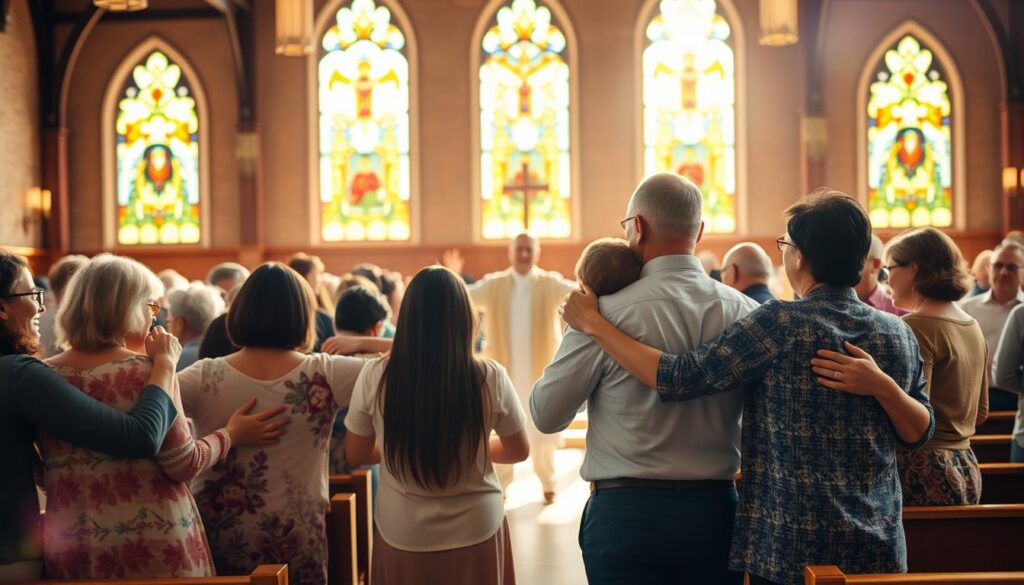
In times of sorrow, a faith community can be a vital source of strength and healing. Sharing the journey of grief with others who understand faith and loss can make it less isolating.
The Role of Religious Communities
Religious communities are key in supporting those who are grieving. They offer a structure of beliefs and practices that help make sense of loss. These communities often have support groups, prayer circles, and other activities that help members feel connected.
Being part of a faith community also opens up chances for service and volunteer work. This can be a meaningful way to honor the deceased and find purpose during tough times.
When and How to Seek Spiritual Counseling
Spiritual counseling is invaluable for those trying to reconcile their faith with grief. It’s important to find advisors who are compassionate and understanding. They can guide you on how to integrate faith into your grieving process and provide a safe space to explore emotions and questions.
When looking for spiritual counseling, consider the counselor’s approach and whether it fits your needs and beliefs. Feeling comfortable with the counselor is key for an open and honest dialogue.
Setting Boundaries in Religious Settings
While religious communities offer comfort, it’s important to set boundaries for your emotional well-being. This might mean choosing which activities to participate in or how involved you want to be in community affairs.
Setting boundaries is not about rejecting support but about being mindful of your own needs and limitations. This way, you can engage with your faith community in a way that nourishes and supports you.
Faith-Based Approaches to Different Types of Loss
Different losses need unique faith-based healing paths. Your grief journey changes based on the loss type, whether sudden or expected.
Sudden Tragedy vs. Expected Transitions
Loss can hit suddenly, like an accident, or be expected, like a long illness. Faith-based coping varies greatly between these. Sudden losses shock us, making faith comfort hard to find at first. Expected losses, though, allow for spiritual prep and community support.
A study showed sudden loss doubters often question their faith. Those with expected losses get more time to spiritually prepare.
Loss Across Different Relationships
Loss in different relationships affects us differently. Losing a child, spouse, or parent each has unique challenges. Tailored faith support is needed for each.
Child Loss and Spiritual Healing
Losing a child is a deep loss. Faith helps understand and cope. Many faiths offer rituals and support for grieving parents.
Spousal Loss and Faith Continuity
Spousal loss brings big life changes, possibly spiritual growth or crisis. Keeping faith through prayer and community activities is key.
| Type of Loss | Faith-Based Coping Mechanisms |
|---|---|
| Sudden Tragedy | Immediate support from faith community, prayer, and scripture reading |
| Expected Transition | Spiritual preparation, advance care planning, and ongoing faith community support |
| Child Loss | Specific rituals for grieving parents, support groups within the faith community |
| Spousal Loss | Prayer, faith community activities, and potential for spiritual growth |
Collective Grief in Faith Communities
Faith communities feel collective grief when members face loss. The community’s response greatly affects healing for those grieving.
“In times of collective grief, the faith community’s response can be a powerful witness to the healing power of faith.”
Faith-based healing for loss shows the value of community and spiritual practices. Understanding the loss and its needs helps individuals and communities heal and grow in faith.
Supporting Others Through Faith and Grief
When someone you care about is going through faith and grief, it can be tough to know how to help. Your support can bring comfort and strength during hard times.
Compassionate Language That Honors Both Faith and Pain
Using kind words is key when supporting others through faith and grief. It’s about balancing their pain with respect for their beliefs. Saying “I’m here for you” or “I’m so sorry for your loss” can help.
It’s also vital to listen well and let them share their feelings without judgment.
Avoiding Harmful Religious Platitudes
It’s natural to want to comfort others, but some religious sayings can be off-putting. Phrases like “It was God’s plan” might hurt if not said carefully. Instead, focus on showing your support and being there for them.
Steer clear of comments that might downplay their grief or suggest their loss was part of a divine plan without their consent.
Practical Ways to Offer Spiritual Support
There are many ways to spiritually support those grieving. You can pray with them, read sacred texts, or just be there. Creating a safe space for them to share their feelings and faith questions is very supportive.
| Practical Support Actions | Spiritual Benefits |
|---|---|
| Offer to pray together | Provides comfort and a sense of spiritual connection |
| Read sacred texts together | Offers solace and guidance from spiritual teachings |
| Be present during difficult times | Demonstrates love and support, reducing feelings of isolation |
Creating New Traditions: Honoring Memory Through Faith
Creating new traditions can be a meaningful way to honor your loved one’s memory through faith. These practices offer comfort and remind you of your ongoing connection. They help you feel closer to those who have passed.
Memorial Practices With Spiritual Significance
Developing memorial practices with spiritual significance is powerful. It keeps your loved one’s memory alive. You might create a memory garden, light candles during prayer, or donate to a charity in their name. These acts become rituals that honor their legacy.
Holiday and Anniversary Remembrances
Holidays and anniversaries can be tough. Creating special holiday remembrances helps you feel connected. This could be preparing a favorite meal or visiting a special place. These acts celebrate their life and keep your bond strong.
Finding Ongoing Connection Through Faith Traditions
Your faith traditions offer comfort and continuity. Participating in religious services, reading sacred texts, or praying keeps you connected. These practices also help you navigate grief.
By adding these practices to your life, you honor your loved one’s memory. You also continue your spiritual journey.
Conclusion: Embracing Your Unique Spiritual Path Through Grief
As you go through the complex journey of grief, remember your spiritual path is yours alone. What comforts you might not comfort others. It’s key to find what works for you in coping with loss.
We’ve looked at how faith and grief meet, and how to create new traditions to honor loved ones. Your journey isn’t about following a set path. It’s about finding what helps you through this tough time.
Keep in mind, it’s okay to question and doubt. Your faith community and personal rituals can offer comfort and connection. By embracing your spiritual path, you can heal and move forward, even in grief.