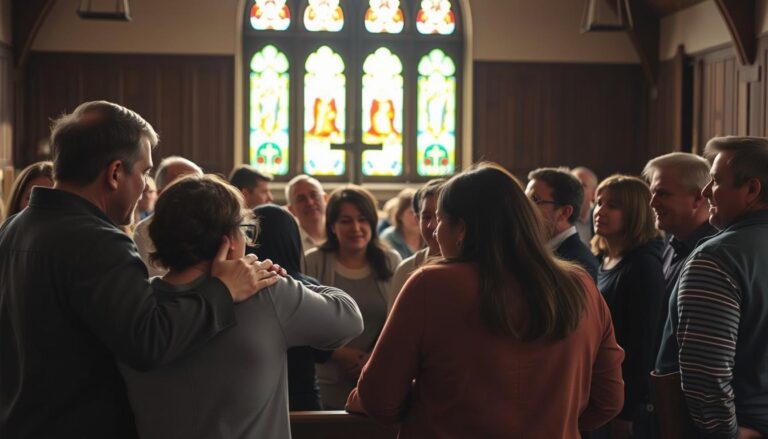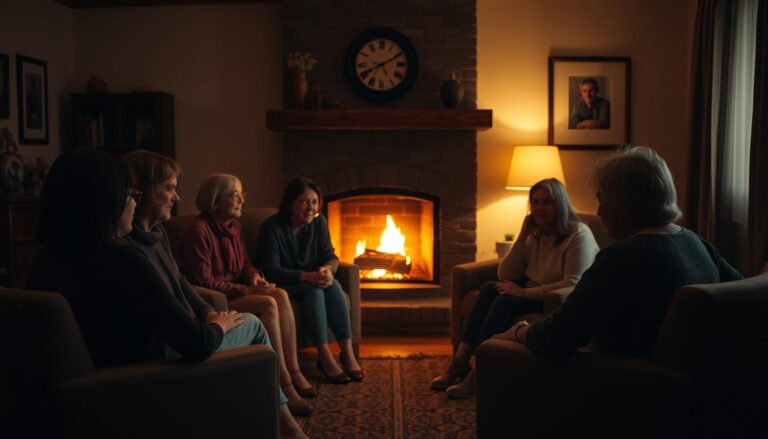

Losing a loved one is very hard. It makes you feel alone and unsure of your feelings. Our grief counseling offers a safe place to share your emotions. Here, you can connect with others who have lost someone too.
Being part of our community means finding comfort and solace with those who get your pain. Our bereavement support is made to help you heal and move forward.
Key Takeaways
- Find comfort in a community that understands your loss.
- Receive grief counseling from experienced professionals.
- Connect with others who have experienced a similar loss.
- Heal and find a way forward with our bereavement support.
- Join a safe and supportive environment to share your feelings.
Understanding Grief and the Healing Journey
Grief is a complex journey that affects us deeply. It’s a natural response to loss, touching our emotions, bodies, and minds. Understanding this can help us heal.

The Nature of Grief and Loss
Grief is a universal experience, yet it’s deeply personal. It brings a mix of emotions, from sadness to anger. It’s important to see grief as a change in our lives, not just the loss itself.
Loss can trigger a grief response, whether it’s the death of a loved one or a big life change. Recognizing your feelings is the first step to healing.
Common Grief Reactions and Emotions
Everyone grieves differently, and there’s no “right” way to do it. You might feel sad, numb, angry, or even relieved. Physical symptoms like fatigue or sleep issues are also common.
Your emotions can change from day to day or even moment to moment. This rollercoaster can be tough, but it’s a normal part of grieving.
Why Healing Is Not a Linear Process
Healing from grief is not straightforward; it’s more like a journey with ups and downs. You might feel like you’re moving forward one day and taking steps back the next. This is normal.
“Grief is not something you ‘get over.’ It’s something you learn to navigate and live with.” This quote shows that healing doesn’t mean forgetting your pain. It’s about learning to live with it and move forward.
Joining a loss support group or seeking grief therapy can help. They offer support and guidance to navigate your grief and heal.
What Is a Grief Support Group?
Grief can feel very personal and lonely. But, you don’t have to go through it by yourself. A grief support group can offer a sense of community and understanding. Finding the right grief support resources is key when you’re on this challenging journey.

Definition and Purpose
A grief support group is a place where people who have lost someone share their feelings. It’s a safe space to talk about your loss and how you’re coping. The main goal is to offer emotional support and make you feel less alone in your grief.
How Support Groups Differ from Therapy
Therapy and support groups both help with grief, but in different ways. Therapy is usually led by a professional and focuses on your personal healing. On the other hand, a support group is about sharing your story and connecting with others who have gone through similar things. It’s important to remember that you can benefit from both therapy and support groups.
The Power of Shared Experience
Being in a grief support group can be incredibly healing. It’s comforting to be with others who truly understand your pain. You can share your feelings openly, without fear of judgment. This shared understanding helps build a sense of community and connection, which is crucial during the grieving process.
Benefits of Joining Our Grief Support Group
Healing with others who get your loss can change you. Our grief support group offers a community that gets your pain. It’s a safe place to share your feelings.

Emotional Support and Validation
Our group gives you emotional support and validation. Being with others who have lost loved ones makes you feel understood. It helps you feel less alone.
This shared understanding creates a sense of community. It’s key during the grieving process.
Practical Coping Strategies
Our group shares coping strategies that work. You’ll learn how to manage your emotions and daily life. These tips come from group discussions and exercises.
They give you tools to deal with your loss.
Reduced Isolation and New Connections
Grief can make you feel isolated. Our group helps you connect with others who get it. You’ll make new, caring connections.
Creating Meaning After Loss
Finding meaning after loss is important. Our group helps you honor your loved one and find new purpose. Sharing your story and listening to others helps you rebuild your life.
| Benefits | Description |
|---|---|
| Emotional Support | Feeling understood and validated by others who have experienced similar losses. |
| Coping Strategies | Practical techniques shared by the group to manage grief and daily challenges. |
| Reduced Isolation | Forming new connections with others who understand your grief, reducing feelings of loneliness. |
| Creating Meaning | Exploring ways to honor your loved one and find new purpose in life. |
Types of Grief Support Groups We Offer
We know everyone’s grief journey is unique. That’s why we have different support groups for you.
Loss-Specific Groups
Our groups focus on various types of loss. They offer a safe place to share your story with those who get it.
Spouse/Partner Loss
Losing a spouse or partner is a huge loss. Our group is here to support you in your grief.
Child Loss
Child loss is very tough. Our group offers support and understanding from others who’ve been through it.
Parent Loss
Losing a parent is a deep loss. Our group helps you deal with your grief.
Sibling and Friend Loss
Losing a sibling or friend is impactful. Our group is a place to share your feelings and find support.
Open Groups vs. Closed Groups
We have both open and closed groups. Open groups let new members join anytime. Closed groups have a fixed number of members and meet for a set number of sessions. This creates a strong bond among members.
It’s up to you to decide between an open or closed group. Think about what will help you heal the most.
Online and In-Person Options
We offer both online and in-person groups. Online groups are flexible for those who can’t meet in person. In-person groups offer face-to-face support.

What to Expect in Our Grief Support Group Meetings
Joining our grief support group means finding a safe place to share your story. You’ll connect with others who get what you’re going through. Our meetings are a space to talk openly about your feelings and experiences.
Typical Meeting Structure
Our meetings have a set structure to let everyone share. We start with an introduction and a moment of silence to honor our losses. The facilitator then leads the discussion, focusing on what matters to the group.
Key elements of our meeting structure include:
- Introduction and welcome
- Moment of silence or reflection
- Guided discussion or sharing
- Educational component or resource sharing
- Closing and next steps
Facilitation and Leadership
Our groups are led by experienced professionals who know grief well. They’re trained to support you. The facilitator helps guide the discussion, shares resources, and keeps the focus on the group’s needs.

Group Guidelines and Confidentiality
We have clear rules for our meetings to ensure a safe space. These include keeping things private and encouraging empathy. We want everyone to feel heard and understood.
Our guidelines are designed to:
- Protect the privacy of all group members
- Foster a sense of trust and community
- Encourage open and honest sharing
Creating a Safe and Supportive Environment
We aim to make a space where you feel free to share. We build a culture of empathy and respect. This way, you can process your grief and find support among others who understand.
By joining our group, you’ll find a community that gets your pain. They’re here to support you through tough times.
Finding the Right Grief Support Group for Your Needs
Starting your healing journey after a loss means finding the right grief support group. Grief is a personal experience. What works for one might not work for another. So, assessing your personal grief journey is key to finding the right support group for you.
Assessing Your Personal Grief Journey
Understanding your grief means knowing how your loss has affected you. Think about the type of loss, your emotional responses, and any challenges you face. This self-assessment helps you choose a support group that fits your specific situation.
Questions to Ask Before Joining
Before joining a grief support group, ask important questions. Find out about the group’s focus, size, how often they meet, and who leads the group. Knowing these details helps you decide if the group is right for you. Ask about their approach to supporting members and how they handle different grief experiences.
Timing: When to Join a Support Group
The timing for support is up to you. Some join soon after their loss, while others wait. There’s no right or wrong time. Think about when you’re emotionally ready for the support and connection a group offers.
When to Consider Individual Therapy Instead
While support groups are helpful, some might prefer individual therapy. If your grief is complex or you’re feeling overwhelmed, one-on-one therapy could be better. It’s about finding the right support for your unique situation.
By thinking about your grief journey, what support you need, and when to join a group, you can make a choice that helps your healing.
How to Join Our Grief Support Group Today
Starting your healing journey is a big step. We’re here to help you join our grief support group. Our process is easy and caring, so you can start healing quickly.
Registration Process and Scheduling
Starting with our grief support group is easy. Just contact us online or call us. We’ll ask for your name, contact info, and a little about your situation. This helps us find the right group for you.
After you register, we’ll help you pick a meeting time that works for you.
What to Bring to Your First Meeting
For your first meeting, bring a notebook and pen. Write down any thoughts or feelings. You might also bring a photo or memento for comfort.
Most importantly, come ready to share and listen.
Preparing Emotionally for Group Participation
Getting ready for your first meeting means being open to share and listen. It’s okay to feel nervous. Remember, everyone is there to support each other.
Take a moment to breathe and reflect before the meeting. Remind yourself you’re taking a brave step towards healing.
Financial Considerations and Assistance Options
We know money can be a worry. Our group wants to be accessible to all. We offer help like sliding scale fees and financial assistance.
If money is a concern, talk to us. We’re here to help.
Stories of Healing: Testimonials from Group Members
Our group members share brave stories of healing. These stories offer hope and a sense of community. They show us that we’re not alone in our grief.
Finding Hope After Devastating Loss
Many have faced great loss, but they’ve found a way to heal. One member said, “I thought I’d never smile again, but this group has shown me joy is still possible.”
Their stories remind us of the power of support. They show us hope can be found, even in the darkest times.
Building a New Support Network
Our group is a safe place for members to connect. One member said, “I’ve found connections that have become a lifeline.”
These new relationships help members feel less alone. They offer support as they journey through grief.
| Benefits of Support Groups | Member Experiences |
|---|---|
| Emotional Support | “The group has been a source of comfort and strength.” |
| Practical Coping Strategies | “I’ve learned new ways to manage my grief.” |
| Reduced Isolation | “I no longer feel alone in my grief.” |
Learning to Navigate Special Days and Anniversaries
Special days can be hard for those grieving. Our members share ways to cope. One member suggested, “Marking these days with a ritual helps me honor my loved one and process my emotions.”
By sharing their experiences, members help each other. They find ways to get through these tough times.
Moving Forward While Honoring Memories
Our members have learned to move forward while keeping memories alive. One member said, “Healing doesn’t mean forgetting; it means finding a way to live with the loss.”
This balance is key in the healing journey. It lets members cherish memories while living fulfilling lives.
Conclusion: Taking the First Step Toward Healing
Starting your healing journey can be tough, but it’s the first and most important step. Joining our grief support group can help you heal. You’ll find support from others who get what you’re going through.
Our group is a safe place to share your story and get emotional support. You’ll also learn ways to cope with your grief. Taking this step can help you rebuild your life and find new purpose.
We urge you to take this crucial step towards healing. You’ll be with people who care about your well-being. Our grief support group is here to support you every step of the way.