

Losing someone or something important can change your life. It leaves you with deep emotional pain. Turning to faith can be a strong step towards grief recovery. Faith brings comfort and solace, helping you through the dark times of loss.
Your faith can give you a way to understand and deal with your loss. This is key in spiritual healing. It helps you find peace and start rebuilding your life.
As you go through grief, embracing your faith gives you the strength to face challenges. It’s about honoring your loss while moving forward. Your spiritual beliefs guide you.
Key Takeaways
- Faith can be a significant source of comfort during times of grief.
- Spiritual practices can aid in the recovery process.
- Embracing faith can help you find meaning and purpose after loss.
- Grief recovery is a personal journey, and faith can be a guiding force.
- Spiritual healing is an important aspect of overall well-being.
Understanding Grief Through a Spiritual Lens
Many people seek comfort in their spiritual beliefs when dealing with grief. Grief is a universal experience, but it’s deeply personal. It can be shaped by one’s spiritual or religious views.
The Universal Nature of Loss and Grief
Loss and grief touch every human life at some point. The pain of losing someone or facing a big change can be hard to bear. Yet, how we express and process grief varies greatly. It’s influenced by culture, personal experiences, and spirituality.

How Different Faith Traditions View Suffering
Various faiths offer unique views on suffering, loss, and grief. For instance, some see suffering as a test of faith. Others believe it’s a chance for spiritual growth. Understanding these views can help us cope with loss.
- Christianity: Views suffering as a refining process that can draw one closer to God.
- Buddhism: Teaches that suffering is a natural part of life, and that mindfulness and meditation can help alleviate it.
- Islam: Emphasizes patience and prayer during times of hardship.
The Intersection of Emotional and Spiritual Healing
Emotional and spiritual healing are closely linked. As we grieve, spiritual practices like prayer or meditation can ease our emotional pain. This blend of healing can lead to a more complete recovery.
“The wound is the place where the light enters you.” – Rumi
This quote shows how pain and loss can lead to growth and healing.
The Power of Faith in Times of Sorrow
When sorrow hits, faith can be a strong support. It reminds you that you’re not alone in your pain. Faith brings comfort and a sense of companionship.
Finding Meaning in Suffering
Faith helps you understand why hard times come. It gives your pain a purpose. Many believe that suffering can make us grow closer to the divine.

The Comfort of Believing in Something Greater
Believing in something bigger than us can bring peace. It shows there’s more to life than our pain. This belief helps us find stability in tough times.
How Faith Provides Hope for Reunion or Peace
For many, faith offers hope for being reunited with loved ones or eternal peace. This hope is a powerful comfort. It tells us our sorrow is just a chapter in a bigger story.
| Faith Aspect | Comfort Provided | Hope Offered |
|---|---|---|
| Believing in Something Greater | Sense of Peace and Stability | Eternal Peace |
| Finding Meaning in Suffering | Purpose in Pain | Personal Growth |
| Hope for Reunion | Comfort in Loss | Reunion with Loved Ones |
Healing from Loss with Faith: A Path Forward
When we face grief, faith can guide us and offer comfort. Healing from loss is a personal journey, and faith can be a big help. Understanding the spiritual side of grief and how faith aids in healing can lead us to a meaningful path.
The Stages of Grief from a Spiritual Perspective
The stages of grief are often seen as emotional and psychological. But looking at them spiritually gives us more insight. Spiritual growth and healing happen as we go through denial, anger, bargaining, depression, and acceptance. Remember, these stages are not the same for everyone.
- Denial is a spiritual struggle to understand the loss.
- Anger may be towards a higher power or the universe.
- Bargaining involves spiritual pleas or promises.
- Depression is a time of spiritual questioning and seeking.
- Acceptance brings spiritual peace.
When Faith Seems Distant During Grief
It’s common to feel far from faith during grief. This feeling can be hard and may make us feel guilty or alone. It’s important to know these feelings are normal. Recognizing faith’s ebb and flow can help us be kinder to ourselves.

Allowing Faith to Guide Your Healing Timeline
Healing from loss takes time. Faith helps us see that healing happens at its own pace. Trusting in a higher power or the universe gives us patience and understanding. It’s about embracing the journey and finding peace now.
- Practice patience with yourself and your grief.
- Engage in spiritual practices that bring you comfort.
- Seek support from your faith community.
Spiritual Practices That Aid in Grief Recovery
Spiritual practices like prayer and meditation are key in dealing with grief. They help connect us to something bigger, offering comfort and peace when we need it most.
Prayer and Meditation Techniques
Prayer and meditation are powerful tools for coping with grief. Prayer lets us talk directly to a higher power, bringing comfort and peace. Meditation calms the mind and lowers stress. Together, they help us find balance and well-being.

Scripture Reading and Reflection
Scripture reading and reflection are crucial for many during grief. Sacred texts offer guidance, comfort, and insight. Reflecting on these texts helps find meaning and solace in faith.
Rituals and Ceremonies for Remembrance
Rituals and ceremonies are important in grieving. They provide a way to honor and remember loved ones. These practices help us feel connected and find closure.
Journaling Your Spiritual Journey Through Grief
Journaling is a personal way to process grief. Writing down thoughts and feelings helps us understand our journey. It’s a meaningful way to see our progress and growth.
| Spiritual Practice | Description | Benefit |
|---|---|---|
| Prayer and Meditation | Direct communication with a higher power and mindfulness practice | Comfort, peace, and reduced stress |
| Scripture Reading and Reflection | Reading and contemplating sacred texts | Guidance, comfort, and deeper understanding |
| Rituals and Ceremonies | Structured practices to honor and remember loved ones | Closure and connection to loved ones |
| Journaling | Writing down thoughts, feelings, and experiences | Processing grief and tracking spiritual growth |
Finding Community Support Through Faith
A faith community can offer the support and understanding you need during grief. When you’re dealing with loss, being around people who believe the same can comfort and strengthen you.
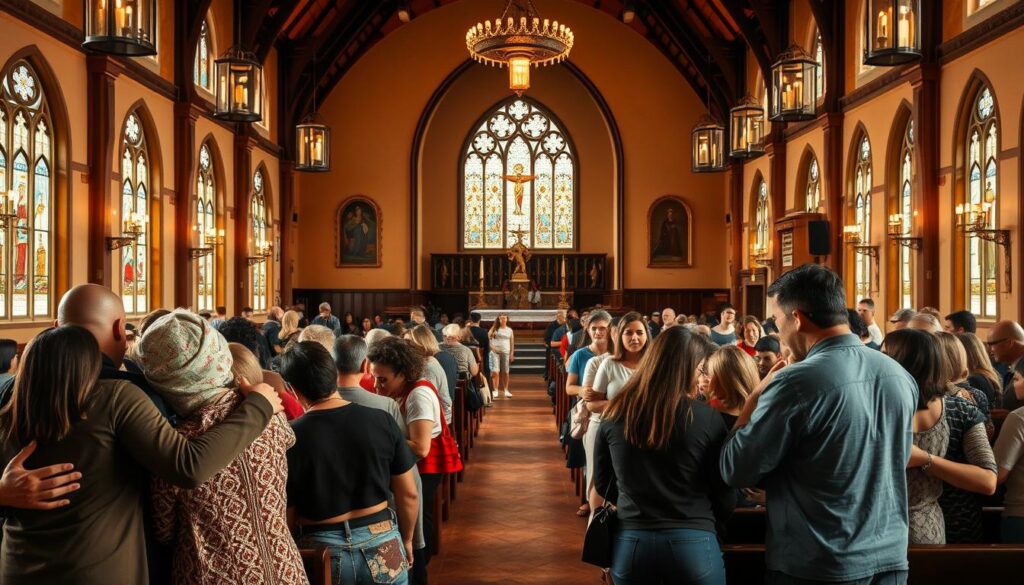
The Role of Religious Communities in Grief Support
Religious communities are key in supporting those through grief. They provide a way to understand and cope with loss. They offer emotional and spiritual support, making you feel less alone in your grief.
- Provide emotional support through shared experiences and communal prayers.
- Offer practical help, such as meals and errands, during difficult times.
- Create a sense of belonging and connection among members.
Grief Support Groups with Spiritual Foundations
Grief support groups with spiritual foundations are very helpful. They offer a safe space to share feelings and experiences, guided by spiritual principles. They help you find meaning in your loss and support your spiritual journey through grief. These groups use scripture, prayer, and reflection to help heal.
- Share personal stories of loss and healing.
- Engage in prayer and meditation together.
- Explore spiritual teachings related to grief and loss.
Connecting with Spiritual Leaders During Loss
Spiritual leaders can offer guidance and support during loss. They provide spiritual counsel, lead memorial services, and offer prayers. Connecting with a spiritual leader can help you understand the spiritual aspects of your grief, offering comfort and insight.
By engaging with a faith community, participating in grief support groups, and connecting with spiritual leaders, you can find meaningful support through your faith during times of grief.
Addressing Spiritual Doubts and Questions After Loss
Losing someone or something important can make you question your faith deeply. This journey is tough but can change you for the better.
When You Question Your Faith
It’s normal to doubt your faith after a loss. You might wonder if your beliefs can handle such hard times. This doubt can be tough but can also help you grow.
Remember, many people question their faith, even in grief. It’s a common part of the spiritual journey.
Wrestling with “Why” Questions
Dealing with loss is hard, and asking “why” is one of the toughest parts. You might ask, “Why did this happen?” or “Why did I lose this person or thing?” These questions are hard to answer when you’re full of spiritual doubts.
Finding Renewed Faith Through Struggle
Though it’s tough, facing your faith and why questions can lead to a renewed faith. This faith is stronger and more meaningful because it’s been tested by hard times.
| Aspect | Challenge | Opportunity |
|---|---|---|
| Questioning Faith | Uncertainty and Doubt | Deeper Understanding |
| Wrestling with “Why” | Pain and Frustration | Seeking Answers, Growth |
| Renewed Faith | Testing Beliefs | Stronger, More Resilient Faith |
By facing your spiritual doubts and working through your questions, you can find a faith that’s not just renewed but also deeper and more personal.
Honoring Loved Ones Through Faith Traditions
Faith traditions offer many ways to remember and honor those who have passed. When you lose someone close, using these traditions can bring comfort. It helps you feel connected to your loved one.
Creating Meaningful Memorials
Creating memorials is a great way to honor your loved ones. You could make a special space in your home with photos and keepsakes. Or, you might choose a garden stone or a charity in their name.
These memorials remind you of the love and memories you shared. For example, lighting a candle or saying a prayer at the memorial can keep your bond alive.
Incorporating Faith into Anniversary Remembrances
Anniversaries of a loved one’s passing can be tough. Using your faith in these remembrances can offer solace. You might go to a special service, say certain prayers, or do a ritual that was important to your loved one.
These actions help you stay connected to your loved one and honor their memory.
Continuing Bonds Through Spiritual Connection
Many faiths believe in keeping a spiritual connection with those who have passed. You can do this by praying for your loved one, sharing stories of their life, or just reflecting on their impact. This ongoing connection can be a source of comfort and healing.
| Faith Tradition | Memorial Practice | Anniversary Remembrance |
|---|---|---|
| Christianity | Creating a memorial prayer garden | Attending a memorial service |
| Judaism | Lighting a yahrzeit candle | Reciting Kaddish |
| Buddhism | Creating a memorial altar | Meditating on the deceased’s virtues |
By using these faith traditions in your remembrance practices, you can honor your loved ones. You can also continue your bond with them in meaningful ways.
Personal Transformation Through Faith-Based Healing
Embracing faith-based healing can lead to deep change in your life. It helps you deal with grief and loss. Your faith becomes a strong tool for change.
Deepening Your Spiritual Connection
Loss can make your spiritual connection stronger. Through prayer, meditation, and reflection, you grow closer to your faith. You find comfort and solace in sorrow.
Finding New Purpose
Faith-based healing helps you find a new purpose. Healing can inspire you to help others facing similar challenges. Your faith experiences guide you.
Becoming a Source of Support
Through faith-based healing, you can support others. Your stories and insights comfort those around you. This creates a wave of healing and hope.
| Aspect of Transformation | Description | Benefit |
|---|---|---|
| Spiritual Connection | Deepening your faith through practices like prayer and meditation | Provides comfort and solace |
| New Purpose | Discovering a new direction or meaning through faith | Inspires helping others |
| Source of Support | Sharing your experiences and insights with others | Creates a ripple effect of healing |
Conclusion: Faith as a Lifelong Companion in Healing
When you face the tough journey of grief, faith can be a constant friend. It brings comfort, guidance, and strength. We’ve looked at how faith helps in healing from loss, from seeing grief through a spiritual view to finding support in faith groups.
Having faith can help you deal with sorrow, giving you meaning and purpose. Through prayer, meditation, and reading scripture, you can feel closer to something bigger. This can bring you peace and hope.
Faith can be your guide through hard times, lighting the way ahead. By making faith a part of your daily life, you can turn your grief into a chance for growth and spiritual renewal.