
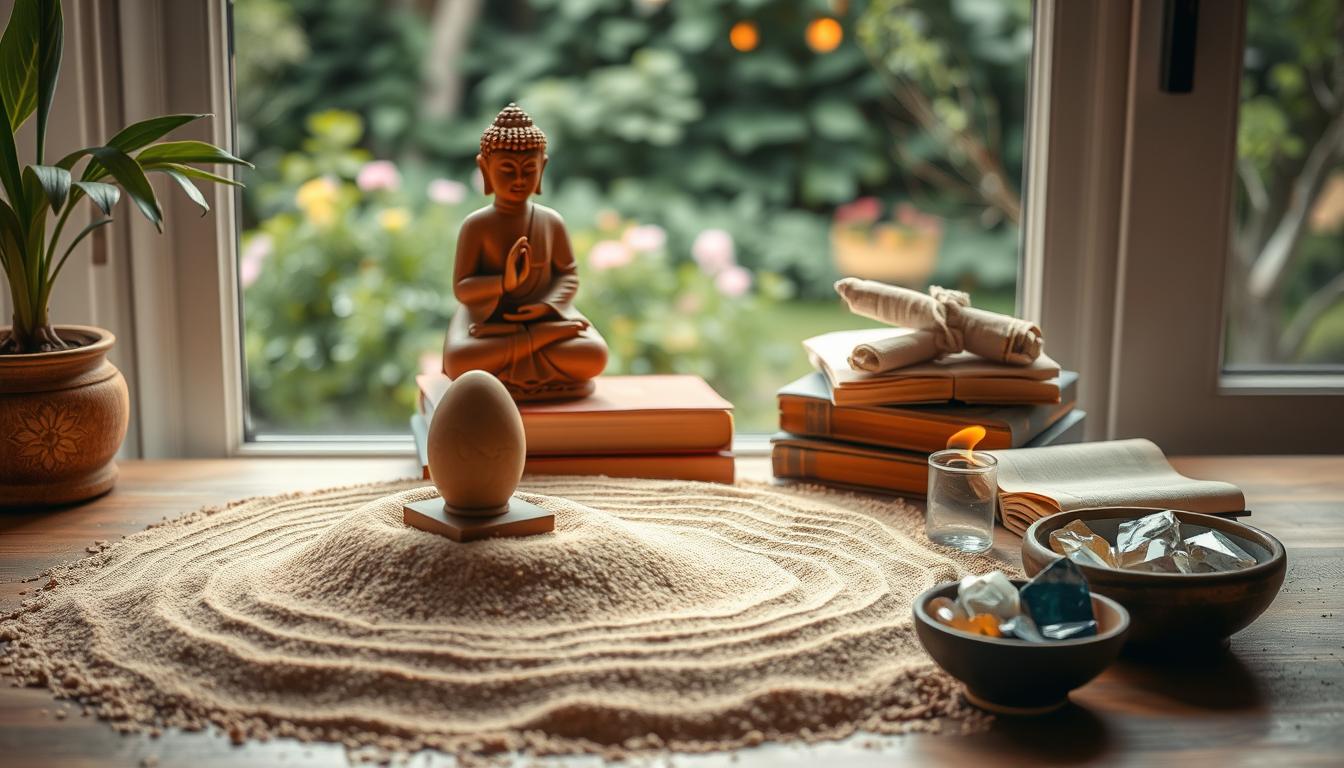
Starting a journey of spiritual growth can change your life. It helps you understand yourself and the world better. Many spiritual tools are out there to guide you on this path.
These tools include meditation, mindfulness, journaling, and energy healing. Using these powerful resources daily can deepen your connection with yourself and the universe.
Key Takeaways
- Discover various spiritual tools to aid in your spiritual journey.
- Learn how to incorporate these tools into your daily life.
- Understand the benefits of using spiritual tools for personal growth.
- Explore different techniques for achieving spiritual enlightenment.
- Find the right spiritual tools to suit your needs and preferences.
Understanding the Path to Spiritual Enlightenment
The path to spiritual enlightenment is a personal journey that needs dedication and the right tools. Knowing what spiritual growth is and why certain tools are key can help a lot. This knowledge can make your journey smoother.
What Defines Spiritual Growth
Spiritual growth means feeling more connected to yourself, others, and the world. It’s about growing qualities like compassion, mindfulness, and peace. This growth is not just about religious practices but a full life approach.
Key aspects of spiritual growth include:
- Developing self-awareness and introspection
- Cultivating emotional intelligence and empathy
- Practicing mindfulness and meditation
- Embracing gratitude and positivity
| Aspect | Description | Benefit |
|---|---|---|
| Self-Awareness | Understanding your thoughts, emotions, and behaviors | Improved decision-making and emotional regulation |
| Mindfulness | Being present in the moment | Reduced stress and increased focus |
| Emotional Intelligence | Recognizing and managing your emotions and those of others | Enhanced relationships and empathy |
Why Tools Matter on Your Spiritual Journey
Spiritual growth tools help you on your journey to enlightenment. They can be meditation, journaling, sacred texts, or mindfulness apps. The right tools offer guidance, support, and structure for your spiritual growth.
The importance of these tools lies in their ability to:
- Enhance your spiritual practice
- Provide a sense of community and connection
- Offer insights and guidance

By using these tools, you can make your spiritual practice more fulfilling. Keep being open to new experiences and resources that support your growth.
Essential Spiritual Growth Tools for Beginners
Spiritual growth is a personal journey that never ends. The right tools can greatly help. As you begin, you’ll find practices and materials that support your growth.
Meditation Essentials
Meditation is key for spiritual growth. It helps you develop mindfulness and peace. To start, you need a few things.
- A quiet and comfy place to meditate
- A regular time to meditate
- A guide or app to keep you focused
Apps like Headspace and Calm are great for beginners. They offer guided sessions.
Journaling Practices
Journaling is a powerful tool for growth. It lets you reflect on your experiences. Writing down your thoughts helps you see things clearly.
| Journaling Benefits | Tips for Effective Journaling |
|---|---|
| Increases self-awareness | Make time each day to journal |
| Helps with reflection and insight | Be true to yourself in your writing |
| Supports personal growth | Try different journaling styles |
Introductory Reading Materials
For newbies, introductory reading materials are essential. They can be classic spiritual texts or modern guides on mindfulness and meditation.
- “The Power of Now” by Eckhart Tolle
- “A New Earth” by Eckhart Tolle
- “Wherever You Go, There You Are” by Jon Kabat-Zinn
These books share valuable insights and practical tips for deepening your spiritual practice.
Meditation and Mindfulness Practices
Starting meditation and mindfulness can really help you grow spiritually and understand yourself better. These practices can greatly improve your well-being and inner peace.
Meditation and mindfulness work together to increase your awareness and calm. Adding them to your daily life can deepen your spiritual journey. It also helps you connect more with yourself and the world.
Guided Meditation Resources
Guided meditation is a great way to start, even if you’re new. There are many resources for guided meditations, like:
- Websites like Insight Timer and Calm that offer a wide range of guided meditations
- Mobile apps such as Headspace and Buddhify that provide personalized meditation sessions
- YouTube channels dedicated to guided meditation, such as Meditation Oasis
These resources can help you begin guided meditation. They let you explore different themes and techniques to improve your practice.
Mindfulness Apps and Programs
Mindfulness apps and programs are great for your spiritual growth. Some popular ones include:
| App/Program | Description | Key Features |
|---|---|---|
| Headspace | Personalized meditation sessions | Animated tutorials, progress tracking |
| Calm | Guided meditation and sleep stories | Soothing music, nature sounds |
| Mindfulness Studio | Customizable mindfulness exercises | Flexible session lengths, various themes |
These apps help you keep up with mindfulness. They also offer a sense of community and support.
Creating Your Sacred Meditation Space
Having a special meditation space can make your practice better. Here are some tips:
- Find a quiet and comfy spot
- Use calming colors and decor for a peaceful feel
- Add candles, plants, or sacred objects for tranquility

By setting up a meditation space, you can find deeper peace and connection with your spiritual practice.
Sacred Texts and Wisdom Literature
Exploring spiritual texts can light your way to enlightenment and peace. These texts are filled with wisdom and insights. They have guided many on their spiritual paths for centuries.
Sacred texts and wisdom literature are key to growing spiritually. They offer guidance, comfort, and inspiration. They teach us how to face life’s challenges and understand ourselves and the world better.
Ancient Spiritual Texts Across Traditions
Ancient spiritual texts are full of wisdom. They give us insights into existence and the path to enlightenment. Here are a few examples:
- The Bhagavad Gita, a Hindu scripture that explores the nature of reality and duty.
- The Bible, a central text of Christianity, containing teachings and stories that guide Christian practice.
- The Tao Te Ching, a foundational text of Taoism, offering wisdom on living in harmony with the natural world.
- The Upanishads, ancient Indian texts that explore the nature of the self and the universe.

Modern Spiritual Authors and Teachers
Modern spiritual authors and teachers also offer valuable insights. Some notable figures include:
| Author/Teacher | Notable Work | Key Teachings |
|---|---|---|
| Eckhart Tolle | The Power of Now | Living in the present moment |
| Deepak Chopra | The Seven Spiritual Laws of Success | Applying spiritual principles to daily life |
| Brené Brown | The Gifts of Imperfection | Cultivating self-acceptance and vulnerability |
How to Study Spiritual Texts Effectively
To get the most from spiritual texts, read thoughtfully and reflectively. Here are some tips:
- Read slowly and contemplatively: Take your time to absorb the meaning of the text.
- Reflect on the teachings: Think about how the teachings apply to your life and experiences.
- Journal your insights: Writing down your thoughts and insights can deepen your understanding.
- Discuss with others: Talking with others can give you new perspectives and insights.
By engaging with sacred texts and wisdom literature, you can enrich your spiritual practice. You’ll gain a deeper understanding of yourself and the world around you.
Physical Tools for Spiritual Development
As you explore spiritual growth, you’ll find many tools to help. These tools can connect you with your inner self. They also deepen your spirituality and make your practice more meaningful.

Crystal Healing and Sacred Stones
Crystal healing uses crystals and stones to absorb and release energy. Each crystal has its own special properties. They can balance your energy, calm your mind, and uplift your spirit.
- Amethyst: Known for its calming properties, amethyst is often used to reduce stress and promote relaxation.
- Rose Quartz: Associated with the heart chakra, rose quartz is believed to foster love, compassion, and emotional healing.
- Clear Quartz: Often referred to as the “master healer,” clear quartz is thought to amplify the effects of other crystals and promote clarity.
To use crystals, meditate with them, place them on your body, or keep them in a sacred space. This way, you can absorb their energy.
Aromatherapy and Essential Oils
Aromatherapy uses essential oils from plants to improve your well-being. Different scents can make you feel relaxed or energized.
| Essential Oil | Properties | Uses |
|---|---|---|
| Lavender | Calming, relaxing | Promotes sleep, reduces anxiety |
| Peppermint | Invigorating, refreshing | Boosts energy, improves focus |
| Frankincense | Grounding, meditative | Enhances spiritual practices, reduces stress |
To add aromatherapy to your spiritual practice, use a diffuser. You can also apply essential oils to your pulse points or add them to your bath water.
“The use of aromatherapy can significantly enhance your spiritual practice by creating a conducive environment for meditation and relaxation.”
Altar Creation and Sacred Objects
Creating an altar is a meaningful way to dedicate a space for spiritual practice and reflection. An altar can be simple or elaborate, with sacred objects that hold personal significance.
- Candles: Representing light and illumination, candles can symbolize the presence of the divine.
- Incense: Used for purification and to create a sacred atmosphere, incense can help you focus your intentions.
- Sacred Images: Incorporating images of spiritual figures or symbols can serve as a reminder of your spiritual goals and aspirations.
Sound Healing Instruments
Sound healing uses instruments to create vibrations that can balance your energy and promote healing. Different instruments produce unique sounds for various uses.
Some popular sound healing instruments include:
- Tibetan Singing Bowls: Known for their rich, resonant tones, Tibetan singing bowls are often used in meditation and sound healing practices.
- Tuning Forks: Used to produce specific frequencies, tuning forks can help align your energy and promote balance.
- Drums: Drumming can be a powerful way to connect with your heartbeat and the natural world, promoting a sense of grounding and unity.
By using these physical tools in your spiritual practice, you can enrich your experience. They nurture your body, mind, and spirit.
Digital Resources and Technology for Spiritual Growth
In today’s world, many digital tools help with spiritual growth. Technology offers easy access to various tools for your spiritual practice.
“The future of spirituality is digital,” says a well-known spiritual leader. This shows how technology and spirituality are coming together.
Top Spiritual Growth Apps
Many apps help with spiritual growth. They offer guided meditations, prayer services, and teachings. Here are some top apps:
- Headspace: Known for its personalized meditation sessions.
- Calm: Offers guided meditation and sleep stories.
- Insight Timer: Features a wide range of free meditations and a timer for personal practice.
Online Communities and Forums
Online communities offer support and connection on your spiritual journey. You can share experiences, ask questions, and learn from others.
Some popular online forums include:
- Reddit’s r/Meditation: A community for discussing meditation practices.
- Spirituality forums on Discord: Various servers dedicated to different spiritual paths.
Virtual Retreats and Workshops
Virtual retreats and workshops let you dive into spiritual practices from home. They include guided meditations, teachings, and interactive sessions.
When picking a virtual retreat, look at the facilitators’ backgrounds and the event’s focus. Make sure it matches your spiritual goals.
Key benefits of digital resources for spiritual growth include:
- Accessibility: Engage in spiritual practices from anywhere.
- Variety: Access a wide range of teachings and practices.
- Community: Connect with others who share your spiritual interests.
By using these digital tools, you can improve your spiritual journey. You’ll also feel more connected and understood.
Integrating Spiritual Growth Tools into Daily Life
To get the most from spiritual growth tools, make them a part of your daily life. This creates a supportive environment for your spiritual growth. Adding spiritual practices to your daily routine can lead to personal growth and inner peace.
Creating a Sustainable Spiritual Practice
Building a lasting spiritual practice starts with setting achievable goals and staying consistent. Allocate a time each day for activities like meditation, journaling, or reading spiritual texts. Consistency is key to making spiritual growth a lasting part of your life.
It’s also vital to be flexible and adjust your spiritual practice as needed. Life’s unpredictable, and your routine should be flexible. Being gentle with yourself and making changes will help keep your practice sustainable.
Morning and Evening Rituals
Morning and evening rituals can greatly enhance your spiritual practice. Morning rituals can set a positive tone, while evening rituals help you unwind and reflect. Start your day with a meditation or mindfulness practice, followed by journaling to clarify your thoughts and intentions.
In the evening, calming activities like aromatherapy or reading spiritual texts before bed can be beneficial. These rituals help you feel grounded and ready for rest.
Balancing Spiritual Practice with Modern Living
It can be tough to balance spiritual practice with modern life, but it’s doable. One way is to mix your spiritual practices into your daily tasks. For instance, practice mindfulness while commuting or during your lunch break.
Technology can also support your spiritual journey. There are many spiritual growth apps with guided meditations, spiritual readings, and community support. Finding ways to blend your spiritual practices with modern life can keep your practice consistent and fulfilling.
Measuring Progress on Your Spiritual Journey
Starting your spiritual journey means learning to track your progress. Spiritual growth is unique to each person. It’s important to find ways to measure your growth.
Signs of Spiritual Growth and Awakening
Knowing the signs of spiritual growth helps you stay focused. Look for these signs:
- A deeper sense of inner peace and calm
- Increased empathy and compassion for others
- A greater sense of purpose and meaning in life
- Heightened intuition and connection to your inner self
When you see these changes, celebrate them. This boosts your commitment to your spiritual path.
Journaling Your Spiritual Evolution
Journaling is a great way to track your spiritual growth. Writing down your thoughts and insights helps you:
- Reflect on your experiences and identify patterns
- Monitor your progress and celebrate milestones
- Gain clarity on your values and spiritual goals
Make journaling a regular part of your spiritual practice. It helps you understand your journey better.
When to Adjust Your Spiritual Toolkit
As you grow spiritually, your needs and practices may change. Be open to updating your spiritual toolkit by:
- Exploring new meditation techniques or practices
- Incorporating different spiritual texts or resources
- Seeking guidance from spiritual teachers or mentors
Being open to change helps you keep growing spiritually.
Tracking your spiritual progress is about enjoying the journey, not reaching a goal. Recognize growth signs, journal your journey, and adapt your practices. This way, you can deepen your spiritual understanding and keep moving forward.
Conclusion: Embracing Your Spiritual Growth Journey
Remember, your spiritual growth journey is unique. The tools and resources in this article are here to help. But, it’s important to find what works best for you.
Adding meditation, mindfulness, and sacred texts to your daily routine can deepen your spiritual practice. It helps you connect more deeply with yourself and the world.
Be patient and kind to yourself as you explore these tools. Celebrate every small step forward. And don’t hesitate to change your approach if needed.
Your spiritual growth journey is a lifelong path. Staying committed to your practice leads to a deeper sense of purpose and fulfillment. It makes your life more authentic and meaningful.